
Rehab success can vary based on the person’s needs, level of care, aftercare plan, support system, and willingness to stay engaged in recovery. Alpine Springs Rehabilitation and Recovery can help you understand treatment options in Pennsylvania, insurance questions, detox needs, relapse prevention, and what support may be available after rehab.
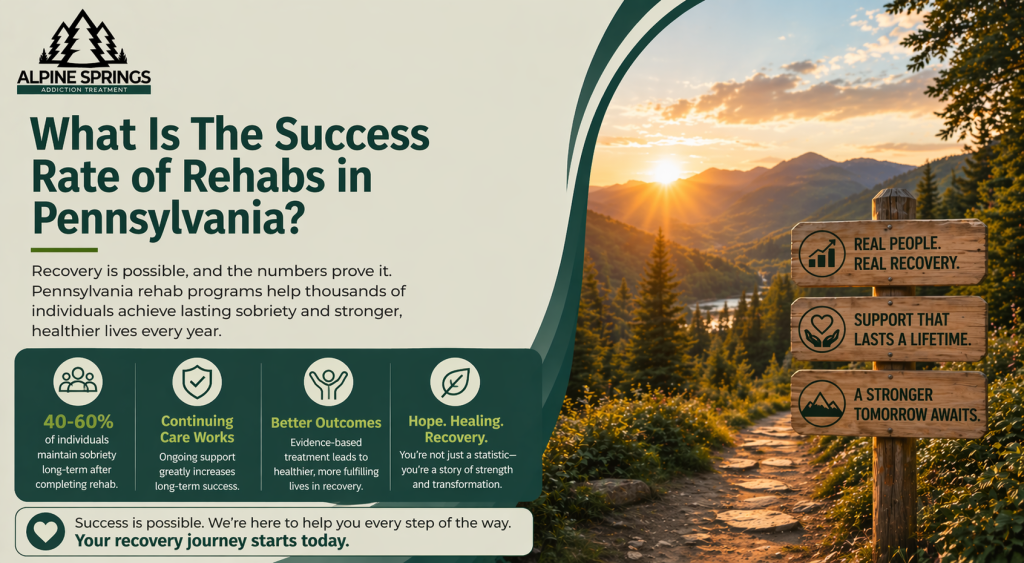
Understanding the success rate of rehab programs in Pennsylvania is not as straightforward as a single percentage. Addiction recovery is complex, and outcomes depend on many factors including the type of treatment, length of stay, and the individual’s level of commitment to recovery.
Defining “Success” in Rehab
Before looking at numbers, it’s important to define what “success” actually means in addiction treatment. Success can include:
- Completing the treatment program
- Maintaining sobriety after discharge
- Reduced substance use over time
- Improved mental and physical health
- Rebuilding relationships and daily functioning
Because of these variables, success rates are often measured differently across facilities.
Average Rehab Success Rates
Across Pennsylvania and the United States, research suggests:
- 40% to 60% of individuals relapse at some point after treatment
- This means 40% to 60% achieve sustained recovery or significant improvement
While relapse rates may seem high, they are comparable to other chronic conditions like hypertension or diabetes. Addiction is a chronic disease, and relapse does not mean failure—it often indicates that treatment needs to be adjusted.
Factors That Influence Success Rates
Rehab outcomes in Pennsylvania vary widely depending on several key factors:
1. Length of Treatment
- 30-day programs offer a foundation
- 60–90+ day programs significantly improve long-term success
2. Level of Care
- Detox only has the lowest long-term success
- Inpatient rehab offers higher stability early on
- Outpatient programs support long-term recovery when combined with other services
3. Aftercare Planning
Programs that include:
- Ongoing therapy
- Support groups
- Alumni programs
…tend to produce much higher success rates.
4. Dual Diagnosis Treatment
Treating both addiction and mental health conditions (like anxiety, depression, or PTSD) greatly improves outcomes.
5. Medication-Assisted Treatment (MAT)
For opioid and alcohol addiction, MAT can:
- Reduce cravings
- Lower relapse rates
- Improve long-term stability
Pennsylvania-Specific Considerations
Pennsylvania rehab programs often incorporate:
- State-funded and private treatment options
- Access to Medication-Assisted Treatment
- Structured step-down care (detox → inpatient → outpatient)
- Strong recovery communities in regions like Erie, Pittsburgh, and Philadelphia
Facilities that provide continuum-of-care models typically report better long-term success.
What Improves Your Chances of Success?
Individuals who experience the best outcomes usually:
- Stay in treatment longer
- Actively participate in therapy
- Build a strong support system
- Follow through with aftercare plans
- Address underlying mental health issues
The Reality of Recovery
Recovery is not a one-time event. It is a long-term process that may include setbacks. The goal of rehab is not just immediate sobriety, but giving individuals the tools to build a sustainable, healthy life.