
Sobriety outcomes can vary from person to person, but treatment, aftercare, counseling, relapse prevention, and ongoing support can all play an important role in long term recovery. Alpine Springs Rehabilitation and Recovery can help you understand treatment options, insurance questions, detox needs, aftercare planning, and the next step toward recovery.
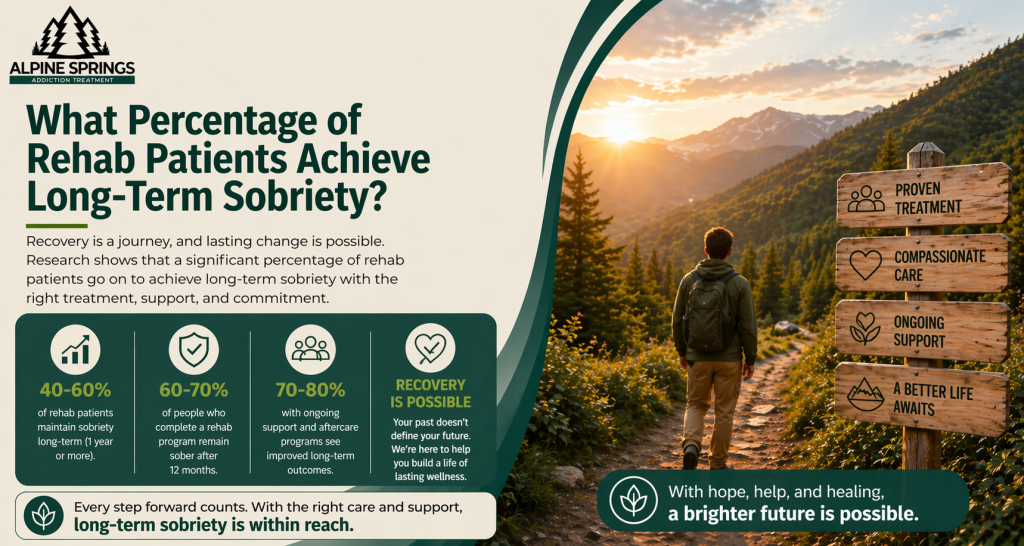
The honest answer is: long-term sobriety rates vary, but most research places them between 30% and 50% for individuals who complete a rehab program and continue with aftercare.
That range may seem lower than expected, but it reflects the reality that addiction is a chronic, relapsing condition (similar to diabetes or hypertension).
What “Long-Term Sobriety” Actually Means
There’s no single definition used across all studies, but it typically refers to:
- Remaining substance-free for 1 year or longer
- Or maintaining significant, sustained reduction in use
- While improving overall quality of life
Some programs also measure success at 6 months, 1 year, and 5 years post-treatment.
Why the Percentage Isn’t Higher
Several factors impact long-term sobriety rates:
- Relapse is common early on (especially within the first 90 days)
- Many individuals do not complete treatment
- Lack of aftercare or support systems
- Untreated mental health conditions
- Returning to high-risk environments
Because of this, success is less about the initial rehab stay and more about what happens afterward.
What Improves Long-Term Sobriety Rates?
Patients who achieve lasting recovery typically have:
1. Longer Treatment Duration
- 60–90+ days leads to significantly better outcomes than short-term stays
2. Structured Aftercare
- Ongoing therapy
- Support groups (AA/NA or alternatives)
- Alumni programs
3. Stable Living Environment
- Sober housing or supportive home life
4. Dual Diagnosis Treatment
- Addressing anxiety, depression, PTSD, or other conditions alongside addiction
5. Medication-Assisted Treatment (MAT)
- Especially effective for opioid and alcohol use disorders
A More Realistic Way to Look at Success
Instead of asking “What percentage stay sober forever?”, a better question is:
“How many people improve their lives and continue progressing in recovery?”
When measured this way:
- A much larger percentage experience reduced substance use
- Many achieve longer and longer periods of sobriety over time
- Relapse often becomes less frequent and less severe
The Bottom Line
- 30%–50% of rehab patients achieve long-term sobriety, especially with continued care
- Outcomes improve significantly with aftercare, longer treatment, and support systems
- Recovery is a process, not a one-time event