
Completing a Pennsylvania rehab program is an important milestone, but continued support can help protect progress after discharge. Alpine Springs Rehabilitation and Recovery can help you understand aftercare planning, outpatient options, relapse prevention, counseling, insurance questions, and what the next step may look like after treatment.
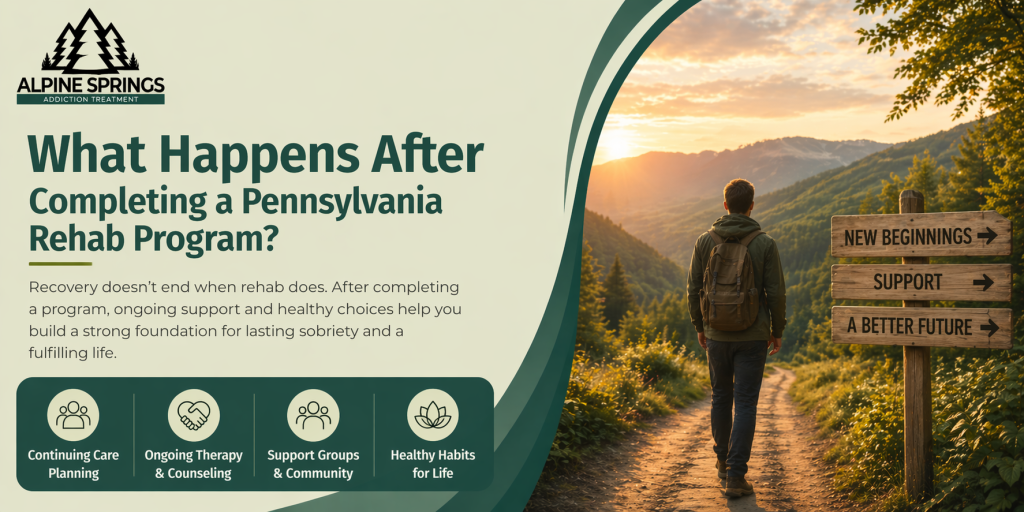
Finishing a rehab program is a major milestone, but recovery doesn’t end when treatment does. In Pennsylvania, most rehab centers emphasize a structured transition into everyday life, supported by ongoing care and relapse prevention strategies. Understanding what happens next can help individuals stay on track and maintain long-term sobriety.
1. Transition to Aftercare Programs
After completing inpatient or intensive treatment, many individuals move into aftercare programs, which may include:
- Outpatient therapy (IOP or standard outpatient)
- Continued counseling sessions
- Medication-assisted treatment (if needed)
These programs provide ongoing support while allowing individuals to reintegrate into daily life.
2. Relapse Prevention Planning
Before leaving rehab, patients typically work with counselors to develop a relapse prevention plan. This includes:
- Identifying triggers and high-risk situations
- Creating coping strategies
- Establishing a support system
Having a clear plan in place helps reduce the risk of relapse during the transition period.
3. Sober Living or Supportive Housing
Some individuals choose to enter sober living homes after rehab. These environments offer:
- Structured, substance-free housing
- Peer accountability
- Gradual independence
Sober living can be especially helpful for those who need additional stability before returning fully to independent living.
4. Ongoing Therapy and Support Groups
Long-term recovery often includes participation in:
- Individual or group therapy
- 12-step programs like AA or NA
- Peer support groups
Consistent engagement in these resources helps reinforce healthy habits and provides a sense of community.
5. Rebuilding Daily Life
Recovery also involves rebuilding important aspects of life, such as:
- Employment or education
- Family relationships
- Physical and mental health routines
Many rehab programs in Pennsylvania offer life skills training to help individuals navigate these responsibilities successfully.
6. Alumni Programs and Continued Connection
Many treatment centers offer alumni programs that keep former patients connected through:
- Regular check-ins
- Events or group meetings
- Ongoing encouragement and accountability
These programs help individuals stay engaged with a recovery-focused community.
Life After Rehab: What Matters Most
The period after rehab is where long-term recovery is truly built. Continued support, structure, and accountability are key to maintaining sobriety and preventing relapse. Choosing a program that offers strong aftercare planning can make a significant difference in long-term success.
If you or a loved one is preparing to leave a rehab program in Pennsylvania, having a clear plan and support system in place is the next critical step toward lasting recovery.