

Long term rehab success can vary from person to person, but ongoing counseling, aftercare planning, relapse prevention, medication support when appropriate, and a strong recovery network can all make a difference. Alpine Springs Rehabilitation and Recovery can help you understand Pennsylvania treatment options, insurance questions, detox needs, and what support may be available after rehab.
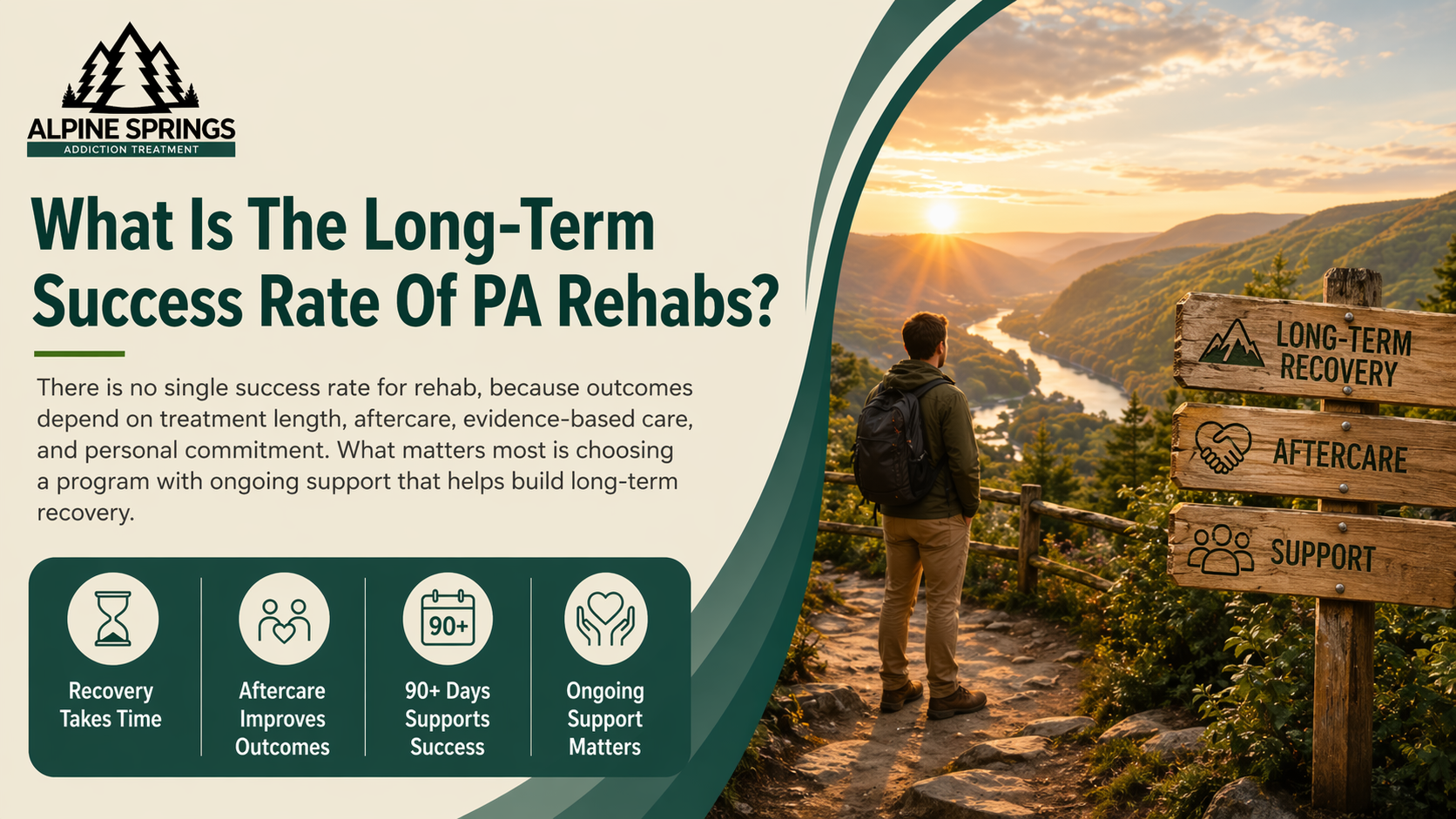
The long-term success rate of rehab programs in Pennsylvania varies widely, and there is no single percentage that applies to everyone. Recovery outcomes depend on factors like the type of treatment, length of stay, level of aftercare, and the individual’s commitment to recovery.
Research from SAMHSA, NIDA, and continuing-care studies shows that recovery is often strengthened by ongoing support, follow-up care, counseling, medication when appropriate, peer support, and aftercare planning.
1. Why Success Rates Are Hard to Define
Unlike many medical treatments, addiction recovery doesn’t have a simple “cure rate.” Success can mean different things, including:
- Long-term sobriety
- Reduced substance use
- Improved mental and physical health
- Better relationships and quality of life
Because of this, success is often measured over time rather than as a single outcome.
2. General Success Rate Estimates
Studies suggest that:
- 40% to 60% of individuals may experience relapse at some point after treatment
- This rate is similar to other chronic conditions like diabetes or hypertension
Importantly, relapse does not mean failure—it often indicates that treatment needs to be adjusted or continued.
3. Factors That Improve Long-Term Success
Certain elements are strongly linked to better outcomes in Pennsylvania rehab programs:
- Longer treatment durations (90 days or more)
- Participation in aftercare or outpatient programs
- Use of evidence-based therapies
- Access to medication-assisted treatment (MAT) when appropriate
- Strong personal support systems
Programs that offer a full continuum of care tend to produce more sustainable results.
4. The Role of Aftercare in Recovery
One of the most important predictors of long-term success is what happens after rehab. Individuals who:
- Attend regular therapy or counseling
- Participate in support groups
- Follow a structured relapse prevention plan
are far more likely to maintain sobriety over time.
5. Choosing the Right Rehab Program Matters
Not all rehab centers are equal. Facilities that provide:
- Individualized treatment plans
- Licensed clinical staff
- Ongoing support services
are better equipped to support long-term recovery.
The Reality of Long-Term Recovery
Recovery is a lifelong process, not a one-time event. While relapse can be part of the journey, consistent support, the right treatment approach, and a strong commitment to change can lead to lasting success.
If you’re considering rehab in Pennsylvania, focus less on a single “success rate” and more on finding a program that offers comprehensive care and long-term support.