

Addiction often affects the entire family, not just the person entering treatment. Alpine Springs Rehabilitation and Recovery can help families understand treatment options, communication, healthy boundaries, relapse prevention, insurance questions, and what support may look like during and after rehab.
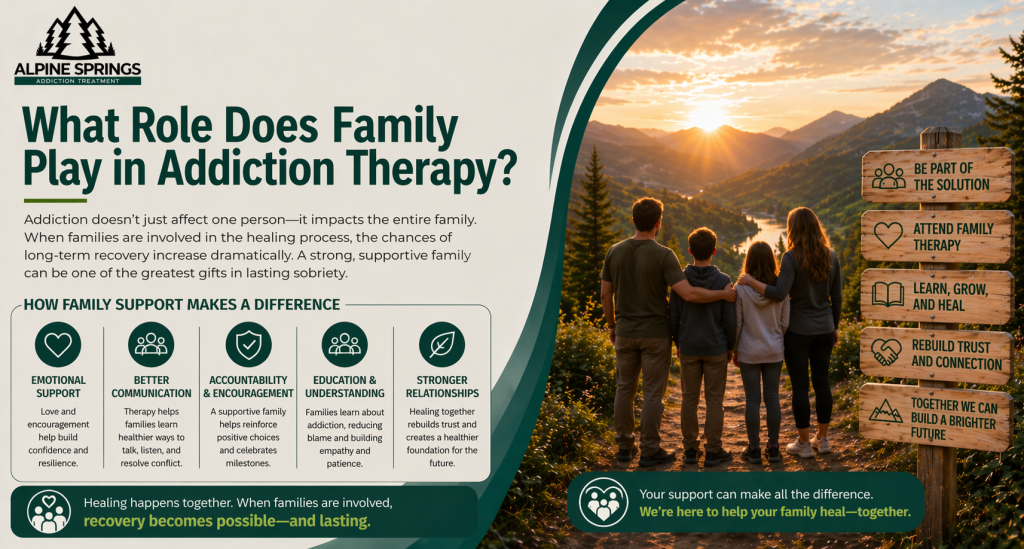
Family plays a powerful and often decisive role in addiction recovery. While treatment focuses on the individual, addiction affects the entire family system, and healing that system can significantly improve long-term outcomes.
Why Family Involvement Matters
Addiction rarely exists in isolation. It often impacts:
- Trust and communication
- Emotional stability within the household
- Financial and social dynamics
- Mental health of loved ones
When families are involved in therapy, recovery becomes a shared effort, not just an individual struggle.
Key Roles Family Members Play in Recovery
1. Providing Emotional Support
Support from family can:
- Reduce feelings of isolation
- Increase motivation to stay in treatment
- Reinforce positive behaviors
Patients with strong family support are more likely to complete treatment and maintain sobriety.
2. Participating in Family Therapy
Family therapy sessions help:
- Address past conflicts and resentment
- Improve communication skills
- Rebuild trust over time
These sessions create a safe space to heal relationships, which is critical for long-term recovery.
3. Understanding Addiction as a Disease
Education is a major component of family involvement. Families learn:
- Addiction is a chronic medical condition, not a moral failure
- How triggers and relapse work
- What healthy support looks like
This reduces blame and helps families respond more effectively.
4. Setting Healthy Boundaries
One of the most important roles families play is learning how to:
- Avoid enabling behaviors
- Set clear, consistent boundaries
- Encourage accountability
Healthy boundaries protect both the patient and the family.
5. Supporting Aftercare and Long-Term Recovery
After rehab, family involvement becomes even more important. Families can:
- Encourage attendance at therapy or support groups
- Help maintain a stable living environment
- Recognize early warning signs of relapse
Ongoing support is a major factor in sustained sobriety.
When Family Dynamics Need Healing
In some cases, family relationships may contribute to stress or substance use. Therapy helps:
- Identify unhealthy patterns
- Address codependency
- Create healthier roles within the family system
Recovery is not just about removing substances—it’s about changing the environment that surrounds the individual.
The Impact on Recovery Outcomes
Studies consistently show that patients with engaged family support:
- Stay in treatment longer
- Have lower relapse rates
- Experience better emotional and psychological outcomes
Family involvement can be the difference between short-term sobriety and lasting recovery.