

Pennsylvania rehab facilities may offer different types of recovery support, including counseling spaces, group therapy, medical care, recreational activities, family support, and aftercare planning. Alpine Springs Rehabilitation and Recovery can help you understand available services, treatment options, insurance questions, detox needs, and what setting may be the best fit.
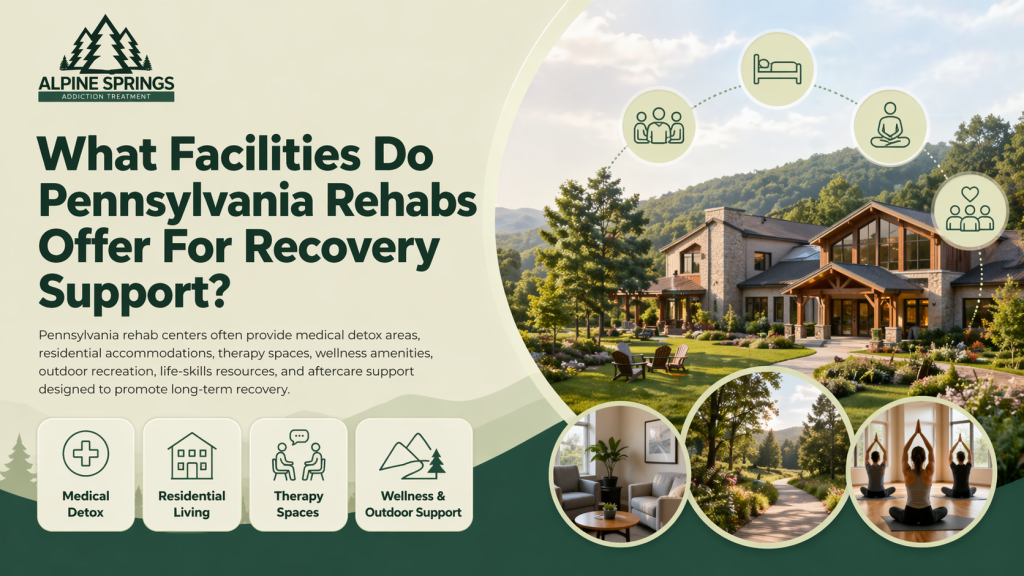
Rehabilitation centers across Pennsylvania provide a wide range of facilities designed to support individuals through every stage of recovery. While each center is different, most offer a combination of medical care, therapeutic spaces, and supportive amenities that promote healing both physically and mentally.
1. Medical Detox and Clinical Care Areas
Many Pennsylvania rehab facilities include dedicated spaces for medical detox and stabilization, featuring:
- 24/7 medical monitoring
- Medication management rooms
- Private or semi-private patient rooms
- On-site nursing and physician support
These facilities ensure patients can safely manage withdrawal symptoms under professional supervision.
2. Residential Living Accommodations
For inpatient treatment, rehabs typically provide structured living environments such as:
- Shared or private bedrooms
- Common living areas for peer interaction
- Dining facilities with scheduled meals
- Laundry and daily living support
A stable, routine-focused environment is critical for early recovery.
3. Therapy and Counseling Spaces
Treatment centers prioritize spaces designed for clinical work, including:
- Private counseling offices for one-on-one therapy
- Group therapy rooms for peer sessions
- Family therapy meeting areas
These environments support evidence-based therapies and open communication.
4. Wellness and Holistic Treatment Areas
Many facilities incorporate holistic recovery options to complement clinical care, such as:
- Fitness centers or exercise rooms
- Yoga and meditation spaces
- Art or music therapy rooms
These amenities help address stress, emotional regulation, and overall well-being.
5. Outdoor and Recreational Spaces
Access to outdoor environments can play a major role in recovery. Some Pennsylvania rehabs offer:
- Walking paths or nature trails
- Courtyards or green spaces
- Recreational areas for sports or activities
These spaces encourage physical activity and provide a healthy outlet for stress.
6. Educational and Life Skills Areas
Recovery often includes rebuilding daily life skills. Facilities may include:
- Classrooms for educational sessions
- Job readiness or vocational training areas
- Computer access for skill development
These resources help individuals prepare for life after treatment.
7. Aftercare and Outpatient Support Facilities
Many rehab centers extend care beyond inpatient treatment with:
- Outpatient therapy offices
- Alumni meeting spaces
- Relapse prevention program areas
Continuity of care is a key factor in maintaining long-term sobriety.
Why Facilities Matter in Recovery
The quality and variety of facilities in a rehab center can directly impact a person’s comfort, engagement, and overall success in treatment. A well-equipped center provides not just medical care, but a supportive environment where individuals can rebuild their lives.
If you’re exploring rehab options in Pennsylvania, understanding what facilities are available can help you choose a program that meets your needs and supports lasting recovery.