
Counselors play an important role in helping people understand triggers, build coping skills, work through emotional challenges, and prepare for life after treatment. Alpine Springs Rehabilitation and Recovery can help you learn more about counseling, treatment options, insurance questions, detox needs, and next steps.
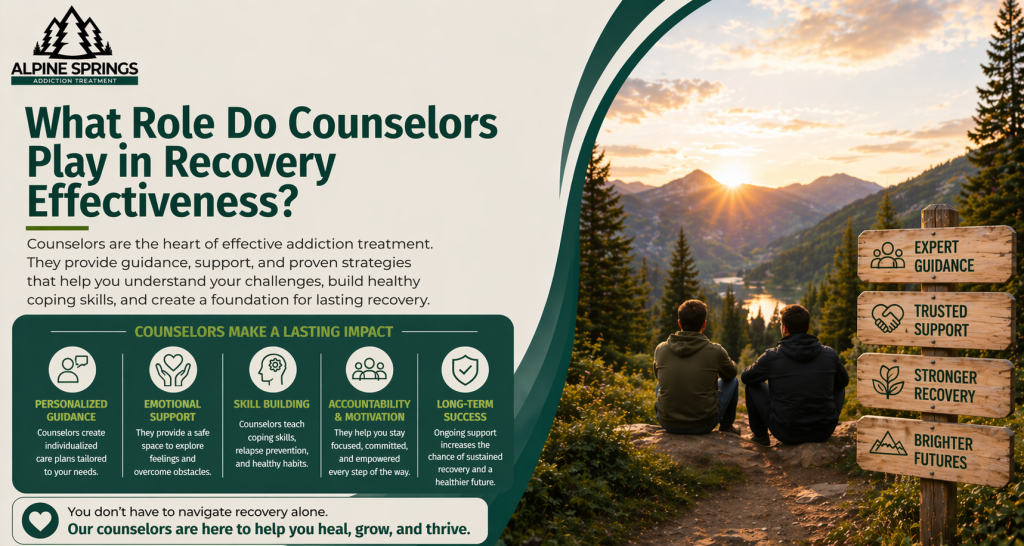
Counselors are one of the most important factors in determining how effective addiction treatment is. While medical care and structure matter, it’s often the therapeutic relationship and guidance from counselors that drive real, lasting change.
The Core Role of Counselors in Rehab
Counselors do far more than just “talk therapy.” They actively guide patients through the psychological and behavioral changes required for recovery.
Their responsibilities include:
- Conducting individual therapy sessions
- Leading group counseling and peer discussions
- Identifying triggers and root causes of addiction
- Teaching coping strategies and relapse prevention
- Creating personalized treatment plans
They serve as both a guide and accountability partner throughout the recovery process.
Why Counselors Are Critical to Recovery Success
1. Addressing the Root Cause of Addiction
Substance use is often tied to deeper issues like trauma, anxiety, depression, or unresolved stress. Counselors help patients:
- Understand why they use substances
- Process past experiences
- Develop healthier emotional responses
Without this step, relapse risk increases significantly.
2. Building Coping and Life Skills
Recovery isn’t just about stopping substance use—it’s about learning how to live without it.
Counselors teach:
- Stress management techniques
- Emotional regulation
- Communication and relationship skills
- Problem-solving strategies
These skills are essential for long-term sobriety.
3. Providing Structure and Accountability
Regular sessions create consistency and help patients stay on track. Counselors:
- Monitor progress
- Adjust treatment plans as needed
- Hold patients accountable for goals
This structure improves engagement and outcomes.
4. Leading Group Therapy Dynamics
Group therapy is a cornerstone of rehab, and counselors facilitate:
- Peer support and shared experiences
- Honest feedback in a safe environment
- Reduced feelings of isolation
A skilled counselor can turn a group into a powerful recovery tool.
5. Supporting Relapse Prevention
Counselors help patients prepare for real-world challenges by:
- Identifying high-risk situations
- Creating actionable relapse prevention plans
- Practicing responses to triggers
This preparation is one of the strongest predictors of long-term success.
The Impact of Counselor Quality
Not all counseling is equal. Outcomes improve significantly when counselors are:
- Licensed and experienced in addiction treatment
- Trained in evidence-based therapies (CBT, DBT, trauma-informed care)
- Able to build trust and rapport with patients
The connection between patient and counselor is often a deciding factor in whether someone stays engaged in treatment.
Counselors and Continuum of Care
Counselors also play a major role beyond inpatient rehab by helping patients transition into:
- Outpatient programs
- Sober living environments
- Ongoing therapy or support groups
This continuity dramatically improves long-term recovery outcomes.