
Street fentanyl can contain unexpected substances that make overdose risk and withdrawal symptoms more complicated. If you or someone you love is using fentanyl or other opioids, Alpine Springs Rehabilitation and Recovery can help you understand detox needs, treatment options, insurance questions, and next steps toward safer care.
A dangerous new trend has emerged in the illicit drug supply: medetomidine is now being found mixed with street fentanyl. First identified in increasing frequency around 2023, this combination creates serious risks because standard overdose treatments may not fully work.
Understanding how medetomidine affects the body, and how it changes overdose response, is critical for both medical providers and the public.
What Is Medetomidine?
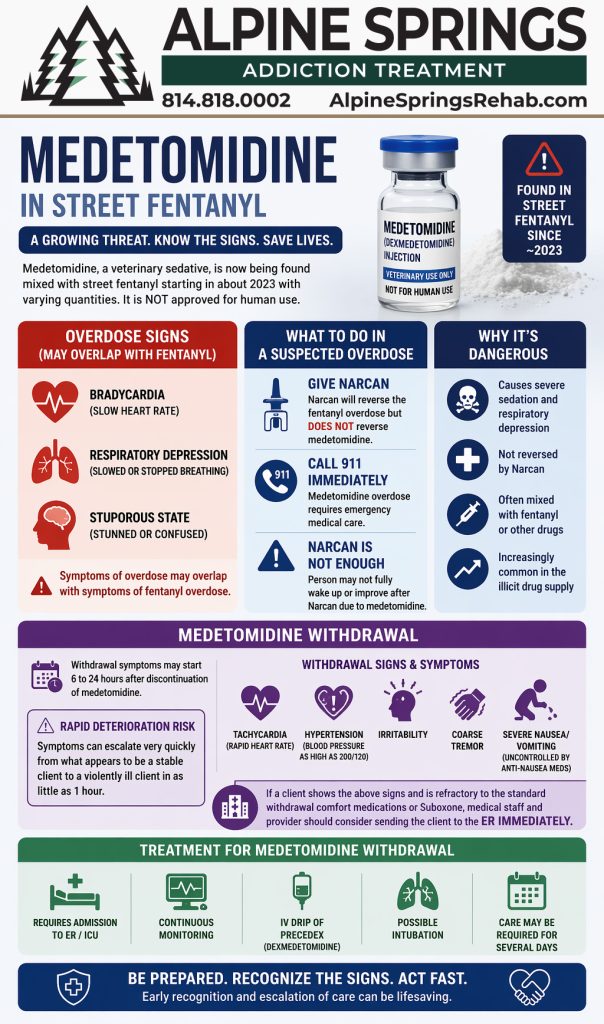
Medetomidine is a veterinary sedative, chemically similar to drugs like xylazine. It is not approved for human use, but is now being detected in illicit opioid supplies.
When combined with fentanyl, it creates a dual-depressant effect, significantly increasing the risk of severe complications and death.
Overdose Signs: What to Watch For
Medetomidine-related overdose symptoms can overlap with fentanyl, making identification more difficult.
Key signs include:
- Bradycardia (slow heart rate)
- Respiratory depression (slowed or stopped breathing)
- Stuporous or unresponsive state (confusion, sedation, unconsciousness)
Because these symptoms mirror opioid overdose, it can be challenging to recognize that more than fentanyl is involved.
Why Narcan Alone May Not Be Enough
In suspected overdose cases:
- Narcan (naloxone) should still be administered immediately to reverse the opioid (fentanyl) effects
- However, Narcan does NOT reverse medetomidine
This means:
- The person may not fully regain consciousness after Narcan
- Breathing and heart rate may remain dangerously suppressed
👉 Emergency medical services (911) must always be called in suspected cases involving fentanyl, especially with unknown substances.
Medetomidine Withdrawal: A Medical Emergency
Withdrawal symptoms from medetomidine can begin within 6 to 24 hours after use stops and can escalate rapidly.
Common symptoms include:
- Tachycardia (rapid heart rate)
- Severe hypertension (blood pressure as high as 200/120)
- Irritability and agitation
- Coarse tremors
- Severe, uncontrollable nausea and vomiting
Rapid Deterioration Risk
One of the most dangerous aspects of medetomidine withdrawal is how quickly it can escalate.
- Patients may appear stable initially
- Symptoms can worsen dramatically within as little as one hour
- Standard withdrawal treatments (including Suboxone and comfort meds) may not be effective
⚠️ If a patient is not responding to typical withdrawal management, immediate transfer to the emergency room is critical.
Required Medical Treatment
Medetomidine withdrawal is not manageable in a standard detox setting.
Treatment often requires:
- Hospital admission (ER or ICU)
- Continuous monitoring
- IV sedation using medications such as Precedex (dexmedetomidine)
- In severe cases, intubation and respiratory support
This level of care may be required for several days.
Why This Matters for Pennsylvania Rehab Facilities
With the drug supply becoming increasingly unpredictable, facilities must be prepared for substances that:
- Do not respond to traditional opioid reversal methods
- Require higher levels of medical intervention
- Can destabilize patients extremely quickly
Early recognition and escalation of care can be lifesaving.